

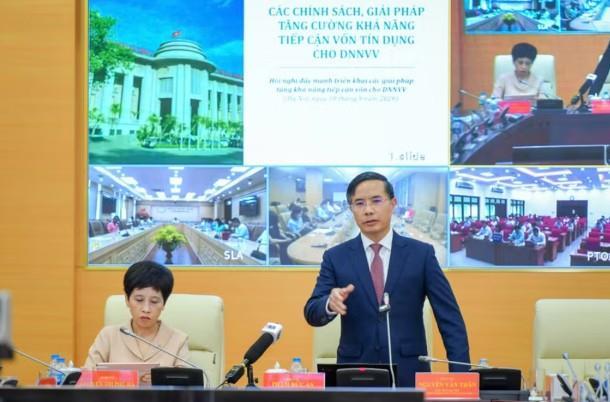


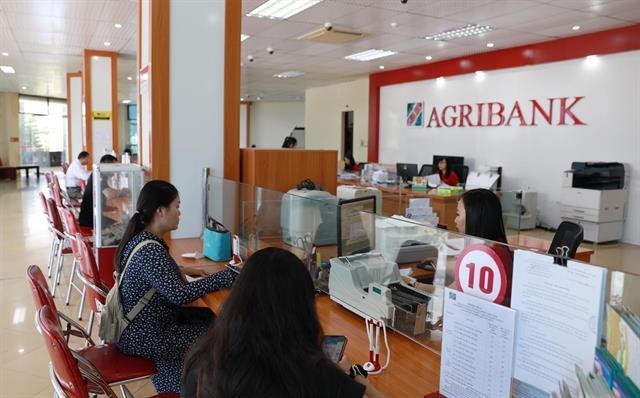







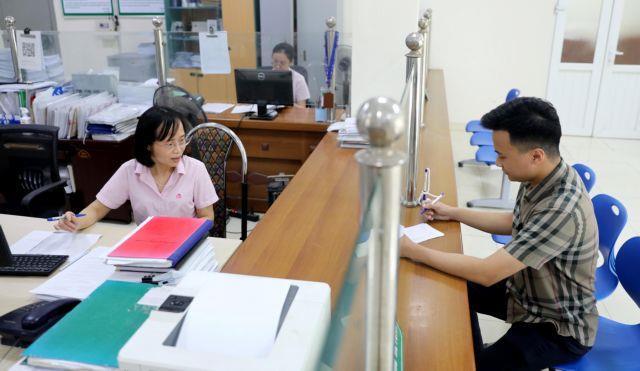
Business representatives said high interest rates are not only increasing financing costs, but also discouraging investment, particularly among small and medium-sized enterprises (SMEs), which account for more than 98 per cent of all businesses in Việt Nam.
Ninh Bình Province aims to develop about 200 products rated three stars or higher under the One Commune One Product (OCOP) programme during the 2026-2030 period. The target includes at least four products recognised as national five-star OCOP products.
Despite greater awareness, implementation remains uneven, with some companies failing to achieve expected returns after investing in digital systems because of insufficient expertise and inadequate operating processes.
Small loans will be capped at VNĐ200 million for people''s credit funds and VNĐ400 million for all other credit institutions, from the current maximum of VNĐ100 million.
It is critical for SMEs to improve financial transparency and accelerate digital transformation to strengthen competitiveness and adapt to a rapidly changing business environment, an SME dialogue heard on June 24.
Việt Nam should simplify certification requirements for green projects and build a digital data platform for environmental data to help small and medium-sized enterprises (SMEs) access green loans, experts said at a conference on June 23.
Under the resolution, eligible beneficiaries include businesses registered in Hà Nội that either have no State ownership or have State capital accounting for less than 50 per cent of charter capital.
Việt Nam has set a goal for at least 300,000 small and medium-sized enterprises (SMEs) to have outstanding loans at credit institutions by 2030 under the new national financial inclusion strategy.
Draft amendments to the Law on Support for Small- and Medium-Sized Enterprises aim to reduce SMEs’ dependence on collateral-backed borrowing and encourage banks to assess borrowers based on business performance, transaction data, cash flow and value chains.
The government is drafting comprehensive amendments to the Law on Support for Small and Medium-Sized Enterprises to a more coherent, long-term and effective legal framework for the business sector.
New small and medium-sized enterprises (SMEs) are exempted from corporate income tax (CIT) for their first three years of operation under a new Government decree which aims at promoting the development of the private sector.
Government has approved a nation-wide inter-agency legal support programmes for small and medium – sized enterprises (SMEs) and household businesses for the 2026-30 period with an aim to strengthen their legal awareness and compliance.
Small and medium-sized enterprisesare the backbone of the capital’s economy, accounting for 98.2 per cent of all registered businesses. The city is rolling out an ambitious programme to support these firms, aiming topromote private-sector growth for a more sustainable economy.